National
 Republic Day 2027 गणतंत्र दिवस
The Day India's Constitution Came into Force
Tuesday, 26 January 2027
Republic Day marks the day in 1950 when the Constitution of India came into force and the country became a sovereign democratic republic with an elected head of state.
How the date is fixed: Fixed date: 26 January every year
Why Republic Day is celebrated
On 26 January 1950, India stopped being a dominion under the British Crown and began to govern itself under its own Constitution. From that morning the head of state was an elected President, not a king in London. Republic Day celebrates this change. It honours the idea that power in India comes from its people and that every citizen is equal before the law.
Independence Day reminds us of freedom won from foreign rule. Republic Day reminds us of the rules we chose to live by after that freedom. The Constitution gives each citizen fundamental rights, such as equality, freedom of speech and freedom of religion. It also lists fundamental duties, such as respecting the national flag and protecting public property. Schools, offices and housing societies use the day to read the Preamble aloud and talk about these rights and duties.

The day is also a show of national unity. Soldiers, farmers, artists and children from every state take part in the celebrations in New Delhi. The parade shows India's defence strength, but it also shows the country's languages, dances, crafts and scientific progress. For many families, watching the parade on television in the morning is a yearly ritual.
History and story of Republic Day
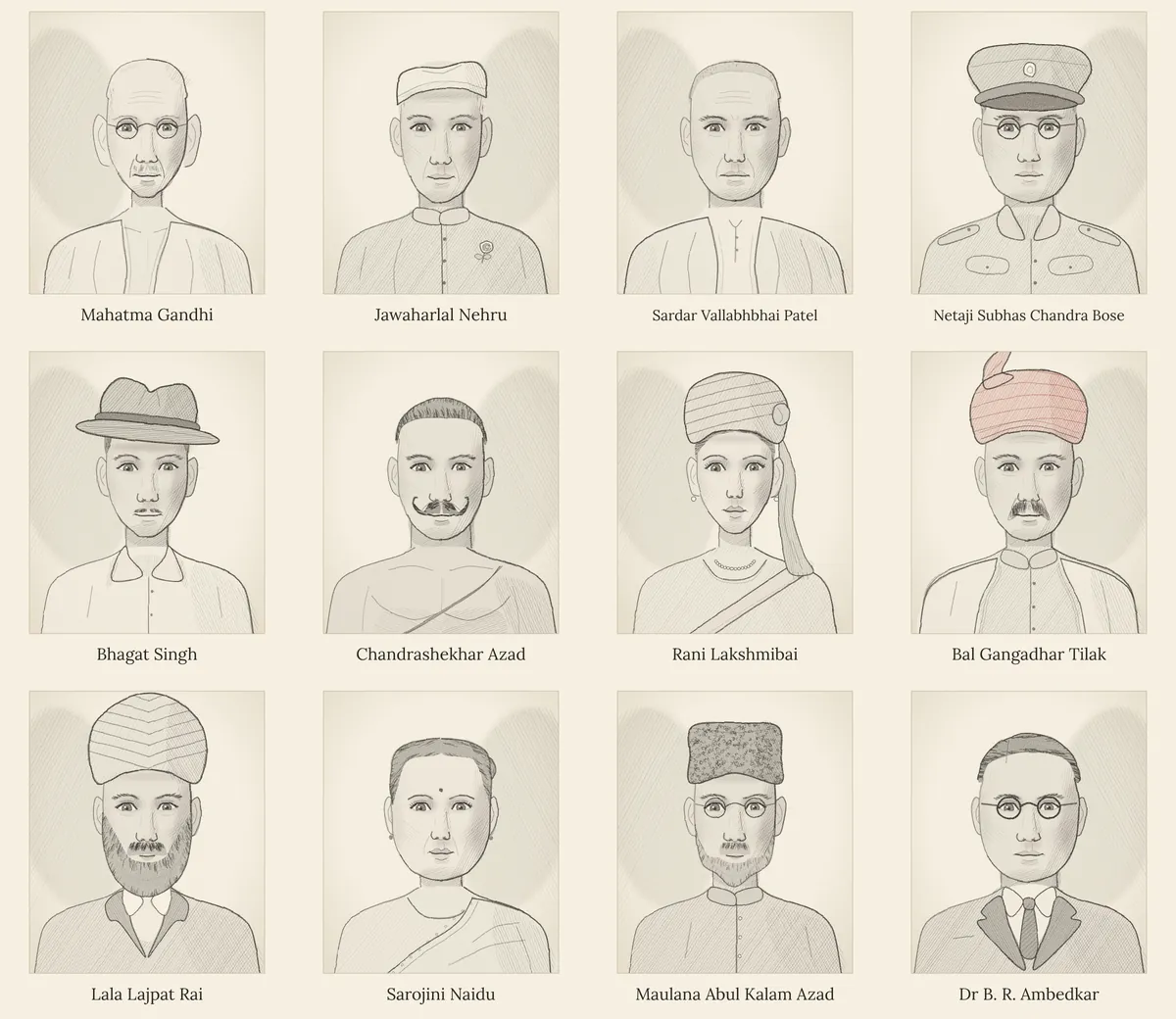
The choice of date goes back twenty years before 1950. At its Lahore session in December 1929, the Indian National Congress, led by Jawaharlal Nehru, passed a resolution demanding Purna Swaraj, or complete self rule. Congress asked Indians to observe 26 January 1930 as Purna Swaraj Day. People across the country took a pledge for full independence that day, and the date was marked every year until 1947.
After independence on 15 August 1947, the Constituent Assembly continued its work on a Constitution. The Drafting Committee was chaired by Dr B.R. Ambedkar. The Assembly debated every article for nearly three years. It adopted the final text on 26 November 1949, a date now observed as Constitution Day or Samvidhan Divas. Leaders decided to bring the Constitution into force on 26 January 1950 so that the old Purna Swaraj Day would gain a new meaning.
On that day Dr Rajendra Prasad took the oath as the first President of India. The first parade was held at the Irwin Amphitheatre, the ground now called the Major Dhyan Chand National Stadium in Delhi. President Sukarno of Indonesia was the chief guest. In later years the parade moved to Rajpath, the grand avenue between Rashtrapati Bhavan and India Gate. The road was renamed Kartavya Path in 2022.
Each year India invites one or more foreign leaders as chief guests. For the 77th Republic Day on 26 January 2026, the chief guests were the President of the European Council and the President of the European Commission. The parade theme marked 150 years of the national song Vande Mataram.
How Republic Day is celebrated
Celebrations start on the evening of 25 January, when the President addresses the nation on radio and television. The government also announces the Padma awards and gallantry awards around this time.
On the morning of 26 January, the Prime Minister lays a wreath at the National War Memorial to honour soldiers who died for the country. The President then arrives at Kartavya Path with the chief guest. The national flag is unfurled, the national anthem is played and a 21 gun salute follows. Gallantry awards such as the Ashoka Chakra may be presented on the spot.
The parade itself follows a set order. Marching contingents of the Army, Navy and Air Force pass the saluting dais, followed by paramilitary forces, the NCC and bands. Tanks, missiles and other equipment roll past. Colourful tableaux from states, union territories and central ministries show local culture, history and development schemes. School children perform folk dances. The show ends with a flypast of fighter jets, transport aircraft and helicopters.
Across the country, governors unfurl the flag in state capitals and district officers do the same at district headquarters. Schools hold flag hoisting, speeches, quiz contests and patriotic songs, and sweets such as laddoo are distributed. Many people wear tricolour badges. Housing societies and offices hold small flag ceremonies.
Celebrations formally close on the evening of 29 January with the Beating Retreat ceremony at Vijay Chowk. Military bands play tunes as the sun sets and the flags are lowered, after which Rashtrapati Bhavan and nearby buildings light up.
Important days and moments
- President's address to the nation (Evening of 25 January)
The President speaks to citizens on radio and television, reflecting on the year and the values of the Constitution. Padma award names are announced around the same time. - Wreath laying at the National War Memorial (Morning of 26 January (Monday in 2026))
The Prime Minister pays tribute to fallen soldiers before the parade begins. - Flag unfurling and Republic Day Parade (Morning of 26 January)
The President unfurls the flag at Kartavya Path, followed by the anthem, a 21 gun salute, marching contingents, state tableaux and an air force flypast. - Beating Retreat ceremony (Evening of 29 January)
Military bands perform at Vijay Chowk at sunset to formally close the Republic Day celebrations.
Republic Day across India
Every state holds its own official function. In Uttarakhand, the main state ceremony is usually held at the Parade Ground in Dehradun, where the Governor unfurls the flag, inspects the parade and watches tableaux from state departments. District headquarters in Garhwal and Kumaon hold similar functions.
Uttarakhand sends a large number of young people into the armed forces, so the day carries special pride in many hill families. Regiments with deep roots in the state, such as the Garhwal Rifles and the Kumaon Regiment, have often marched on Kartavya Path. In Dehradun, schools, colleges and ex-servicemen's groups also hold their own events.
Other names and related festivals
- 26 January
- Gantantra Diwas
Frequently asked questions
When is Republic Day in 2027?
Republic Day falls on Tuesday, 26 January 2027.
Is Republic Day a bank holiday?
The RBI bank holiday lists for 2027 are not out yet; they usually come out in December or January. Each state follows its own list, so check your state's bank holiday page then.
Is Republic Day a central government holiday?
Yes. Republic Day is one of the compulsory holidays for all central government offices in 2027.
What are the other names of Republic Day?
Republic Day is also known as 26 January, Gantantra Diwas.
Why is Republic Day celebrated on 26 January?
The Constitution of India came into force on 26 January 1950. This date was chosen because Congress had observed 26 January 1930 as Purna Swaraj Day, when Indians pledged to seek complete independence.
What is the difference between Republic Day and Independence Day?
Independence Day on 15 August marks freedom from British rule in 1947. Republic Day marks the start of the Constitution in 1950, when India became a republic with an elected President as head of state.
Who unfurls the national flag on Republic Day?
The President of India unfurls the flag at Kartavya Path in New Delhi. In the states, the Governor performs the ceremony, while on Independence Day the Prime Minister hoists the flag at the Red Fort.
When was the Constitution adopted?
The Constituent Assembly adopted the Constitution on 26 November 1949. That day is now observed as Constitution Day, and the Constitution took effect two months later on 26 January 1950.
Who were the chief guests at Republic Day 2026?
The chief guests at the 77th Republic Day parade were the President of the European Council and the President of the European Commission. The parade theme marked 150 years of Vande Mataram.
Next National festivals (30 days)
No other festival in the next 30 days.
Major National festivals
- 15 AugSun
 Independence Day
 - 2 OctSat
 Gandhi Jayanti
Upcoming central government holidays
Holidays in your state
Bank, state government and school holidays differ from state to state. Pick your state:
Holidays and festivals calendar: October and November 2026
Central government holidays for all of India and major festivals. For bank, state government and school holidays, open your state: Andhra Pradesh, Assam, Bihar, Chhattisgarh, Delhi, Goa, Gujarat, Haryana, Himachal Pradesh, Jammu and Kashmir, Jharkhand, Karnataka, Kerala, Madhya Pradesh, Maharashtra, Odisha, Punjab, Rajasthan, Tamil Nadu, Telangana, Uttar Pradesh, Uttarakhand, West Bengal.
| Mon | Tue | Wed | Thu | Fri | Sat | Sun |
|---|---|---|---|---|---|---|
| 1 | 2
Friday, 2 October Gandhi Jayanti Gandhi Jayanti on 2 October marks the birth anniversary of Mahatma Gandhi, the leader of India's freedom struggle and the voice of truth and non-violence. |
3 | 4 | |||
| 5 | 6 | 7 | 8 | 9 | 10 | 11
Sunday, 11 October Sharad Navratri Sharad Navratri is the nine night autumn festival of the Goddess Durga, beginning with Ghatasthapana and leading up to Dussehra, with fasting, prayer, garba... |
| 12 | 13 | 14 | 15 | 16 | 17
Saturday, 17 October Durga Puja Durga Puja celebrates Goddess Durga's victory over the demon Mahishasura with grand pandals, dhak drums, prayers and feasts, especially in West Bengal and ea... |
18 |
| 19 | 20
Tuesday, 20 October Dussehra Dussehra, or Vijayadashami, celebrates the victory of good over evil, recalling Lord Rama's defeat of Ravana and Goddess Durga's triumph over Mahishasura. |
21 | 22 | 23 | 24 | 25 |
| 26 | 27 | 28 | 29 | 30 | 31 |
| Mon | Tue | Wed | Thu | Fri | Sat | Sun |
|---|---|---|---|---|---|---|
| 1 | ||||||
| 2 | 3 | 4 | 5 | 6 | 7 | 8
Sunday, 8 November Diwali Diwali, the festival of lights, celebrates the victory of light over darkness with Lakshmi Puja, rows of diyas, sweets and family gatherings on the new moon... |
| 9 | 10 | 11 | 12 | 13 | 14 | 15
Sunday, 15 November Chhath Puja Chhath Puja is a four day festival of Bihar and eastern India in which devotees fast and offer arghya to the setting and rising Sun while standing in water. |
| 16 | 17 | 18 | 19 | 20 | 21 | 22 |
| 23 | 24
Tuesday, 24 November Guru Nanak Jayanti Guru Nanak Jayanti, or Prakash Purab, celebrates the birth of Guru Nanak Dev Ji, the founder of Sikhism, with prayers, nagar kirtans, langar and lit up gurdw... |
25 | 26 | 27 | 28 | 29 |
| 30 |
Public holiday Major festival Today
- Sat, 17 Oct
 Durga Puja
 - Tue, 20 Oct
 Dussehra
 - Sun, 8 Nov
 Diwali
 - Sun, 15 Nov
 Chhath Puja
 - Tue, 24 Nov
 Guru Nanak Jayanti