National
 Gandhi Jayanti 2027 गांधी जयंती
Birthday of Mahatma Gandhi
Saturday, 2 October 2027
Gandhi Jayanti on 2 October marks the birth anniversary of Mahatma Gandhi, the leader of India's freedom struggle and the voice of truth and non-violence.
How the date is fixed: Fixed date: 2 October every year, the birth anniversary of Mahatma Gandhi
Why Gandhi Jayanti is celebrated

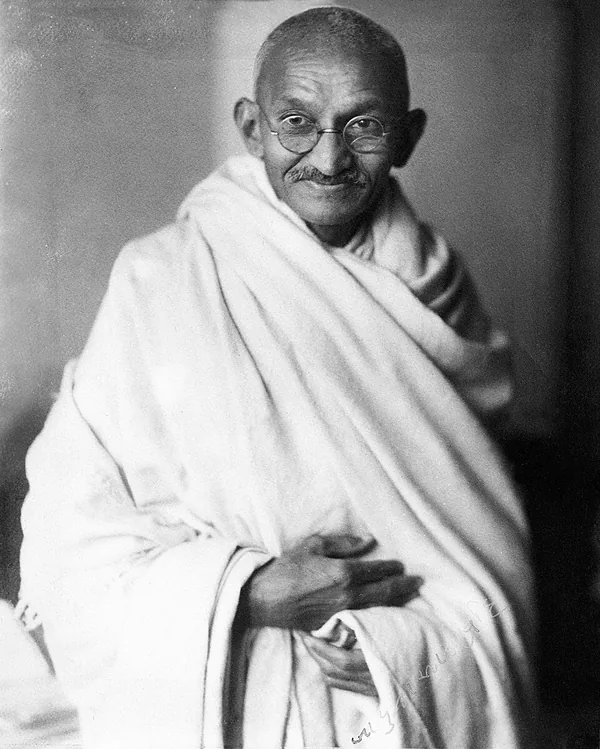
Gandhi Jayanti honours Mohandas Karamchand Gandhi, known to Indians as Bapu and the Father of the Nation. He led India's freedom struggle with two simple but strong ideas: satya, which means truth, and ahimsa, which means non-violence. He showed that ordinary people, by refusing to cooperate with injustice and by accepting suffering without hitting back, could move one of the most powerful empires in the world. In 2026 India marks his 157th birth anniversary.
His message went beyond politics. Gandhi asked people to live simply, to spin and wear khadi, to respect manual work, to keep their surroundings clean and to treat all religions with equal respect. He fought against untouchability and worked for the rights of women and villagers. These ideas shape public life in India even today, from the Swachh Bharat Mission, launched on his birthday in 2014, to campaigns for self-reliance and village industry.
The world shares the day too. In 2007 the United Nations General Assembly declared 2 October the International Day of Non-Violence, and leaders such as Martin Luther King Jr. and Nelson Mandela drew on his methods in their own struggles. The same date is also the birth anniversary of Lal Bahadur Shastri, India's second Prime Minister, who gave the slogan Jai Jawan Jai Kisan.
History and story of Gandhi Jayanti
Gandhi was born on 2 October 1869 in Porbandar, a coastal town in Gujarat, to Karamchand Gandhi and Putlibai. He married Kasturba at the age of thirteen, studied law in London and returned to India as a barrister. In 1893 he went to South Africa for a legal case. There he was thrown off a train at Pietermaritzburg because of his skin colour, an insult that changed his life. Over the next twenty years he organised the Indian community against unjust laws and developed his method of peaceful resistance, which he named satyagraha.
He came back to India in January 1915. His first major campaigns, for indigo farmers in Champaran in 1917 and for peasants in Kheda in 1918, won him national attention. He then led the Non-Cooperation Movement of 1920, the Salt March from Sabarmati to Dandi in 1930, when he walked nearly 390 km to make salt from sea water in defiance of the salt tax, and the Quit India Movement of 1942 with its call of Do or Die. He spent many years in prison.
When freedom came in 1947 along with Partition, Gandhi did not join the celebrations. He was in Bengal, working to stop communal violence. On 30 January 1948 he was shot dead in Delhi while going to his evening prayer meeting. That date is now observed as Martyrs' Day.
How Gandhi Jayanti is celebrated
The day begins at Raj Ghat in Delhi, the memorial where Gandhi was cremated. The President, Vice President, Prime Minister and other leaders lay flowers and attend a prayer meeting with readings from many faiths. His favourite bhajans, Raghupati Raghav Raja Ram and Vaishnav Jan To, are sung. Leaders also visit Vijay Ghat to remember Lal Bahadur Shastri.
Across the country, schools and colleges hold essay and speech competitions, quiz contests and plays on Gandhi's life, though many hold these on the day before since campuses are closed on the day itself. Cleanliness drives are organised in offices, parks and villages, often as the closing day of a fortnight of Swachhata activities. Khadi stores often offer special discounts around this time, and many people buy khadi as a tribute. Prayer meetings and charkha spinning sessions are held at Gandhi ashrams and memorials.
Most states treat 2 October as a dry day, when liquor shops stay closed, in keeping with Gandhi's lifelong opposition to alcohol.
Important days and moments
- Prayer at Raj Ghat (Morning of Friday, 2 October 2026)
National leaders pay floral tributes at Gandhi's memorial in Delhi, followed by an all-faith prayer and bhajans. - Tribute at Vijay Ghat (Morning of 2 October 2026)
Leaders remember Lal Bahadur Shastri, born on the same date in 1904. - Swachhata drives (2 October 2026)
Cleanliness work in villages, towns, offices and schools marks the anniversary of the Swachh Bharat Mission launch. - International Day of Non-Violence (2 October 2026)
The United Nations and Indian missions abroad hold events on Gandhi's ideas of peace and non-violence.
Gandhi Jayanti across India
Gujarat holds major events at Porbandar, where his birthplace Kirti Mandir stands, and at Sabarmati Ashram in Ahmedabad, from where the Salt March began. Sevagram near Wardha in Maharashtra, where he lived from 1936, holds prayers and spinning sessions. The Gandhi Memorial Museum in Madurai and Gandhi Smriti in Delhi, the place of his death, also see many visitors.
Uttarakhand has its own link. In June 1929 Gandhi spent about two weeks at Kausani in Bageshwar district, admiring the view of the Himalayan peaks. There he wrote the introduction to Anasakti Yoga, his commentary on the Bhagavad Gita. The building where he stayed is now known as Anasakti Ashram and holds prayers and programmes on Gandhi Jayanti. In Dehradun, schools, government offices and Gandhian groups hold prayer meetings, cleanliness work and tributes at Gandhi statues in the city.
Other names and related festivals
- Bapu Jayanti
- International Day of Non-Violence
- Mahatma Gandhi Jayanti
Frequently asked questions
When is Gandhi Jayanti in 2027?
Gandhi Jayanti falls on Saturday, 2 October 2027.
Is Gandhi Jayanti a bank holiday?
The RBI bank holiday lists for 2027 are not out yet; they usually come out in December or January. Each state follows its own list, so check your state's bank holiday page then.
Is Gandhi Jayanti a central government holiday?
Yes. Gandhi Jayanti is one of the compulsory holidays for all central government offices in 2027.
What are the other names of Gandhi Jayanti?
Gandhi Jayanti is also known as Bapu Jayanti, International Day of Non-Violence, Mahatma Gandhi Jayanti.
Why is Gandhi Jayanti celebrated?
It marks the birth of Mahatma Gandhi on 2 October 1869. The day honours his role in India's freedom struggle and his message of truth and non-violence.
Which birth anniversary of Gandhi is it in 2026?
2 October 2026 is Gandhi's 157th birth anniversary.
Who else was born on 2 October?
Lal Bahadur Shastri, India's second Prime Minister, was born on 2 October 1904. Leaders pay tribute to him at Vijay Ghat on the same day.
Is 2 October a dry day?
Yes, in most states liquor sales are not allowed on Gandhi Jayanti, in line with Gandhi's views against alcohol.
What is the International Day of Non-Violence?
It is a United Nations observance on 2 October, declared in 2007 in honour of Gandhi's birthday and his ideas of peaceful change.
Next National festivals (30 days)
No other festival in the next 30 days.
Major National festivals
- 26 JanTue
 Republic Day
 - 15 AugSun
 Independence Day
Upcoming central government holidays
Holidays in your state
Bank, state government and school holidays differ from state to state. Pick your state:
Holidays and festivals calendar: October and November 2026
Central government holidays for all of India and major festivals. For bank, state government and school holidays, open your state: Andhra Pradesh, Assam, Bihar, Chhattisgarh, Delhi, Goa, Gujarat, Haryana, Himachal Pradesh, Jammu and Kashmir, Jharkhand, Karnataka, Kerala, Madhya Pradesh, Maharashtra, Odisha, Punjab, Rajasthan, Tamil Nadu, Telangana, Uttar Pradesh, Uttarakhand, West Bengal.
| Mon | Tue | Wed | Thu | Fri | Sat | Sun |
|---|---|---|---|---|---|---|
| 1 | 2
Friday, 2 October Gandhi Jayanti Gandhi Jayanti on 2 October marks the birth anniversary of Mahatma Gandhi, the leader of India's freedom struggle and the voice of truth and non-violence. |
3 | 4 | |||
| 5 | 6 | 7 | 8 | 9 | 10 | 11
Sunday, 11 October Sharad Navratri Sharad Navratri is the nine night autumn festival of the Goddess Durga, beginning with Ghatasthapana and leading up to Dussehra, with fasting, prayer, garba... |
| 12 | 13 | 14 | 15 | 16 | 17
Saturday, 17 October Durga Puja Durga Puja celebrates Goddess Durga's victory over the demon Mahishasura with grand pandals, dhak drums, prayers and feasts, especially in West Bengal and ea... |
18 |
| 19 | 20
Tuesday, 20 October Dussehra Dussehra, or Vijayadashami, celebrates the victory of good over evil, recalling Lord Rama's defeat of Ravana and Goddess Durga's triumph over Mahishasura. |
21 | 22 | 23 | 24 | 25 |
| 26 | 27 | 28 | 29 | 30 | 31 |
| Mon | Tue | Wed | Thu | Fri | Sat | Sun |
|---|---|---|---|---|---|---|
| 1 | ||||||
| 2 | 3 | 4 | 5 | 6 | 7 | 8
Sunday, 8 November Diwali Diwali, the festival of lights, celebrates the victory of light over darkness with Lakshmi Puja, rows of diyas, sweets and family gatherings on the new moon... |
| 9 | 10 | 11 | 12 | 13 | 14 | 15
Sunday, 15 November Chhath Puja Chhath Puja is a four day festival of Bihar and eastern India in which devotees fast and offer arghya to the setting and rising Sun while standing in water. |
| 16 | 17 | 18 | 19 | 20 | 21 | 22 |
| 23 | 24
Tuesday, 24 November Guru Nanak Jayanti Guru Nanak Jayanti, or Prakash Purab, celebrates the birth of Guru Nanak Dev Ji, the founder of Sikhism, with prayers, nagar kirtans, langar and lit up gurdw... |
25 | 26 | 27 | 28 | 29 |
| 30 |
Public holiday Major festival Today
- Sat, 17 Oct
 Durga Puja
 - Tue, 20 Oct
 Dussehra
 - Sun, 8 Nov
 Diwali
 - Sun, 15 Nov
 Chhath Puja
 - Tue, 24 Nov
 Guru Nanak Jayanti